By Siddaganga Real Estate9 min read
Many NRIs keep a plot or a family house in Mysuru long after moving abroad, for sentiment, for a future return, or as a long-term holding. Owning it from far away is very doable, but property nobody watches tends to attract problems: unpaid tax, a tenant who stops paying, a neighbour's wall that creeps onto your land or, in the worst cases, someone trying to sell what isn't theirs. The answer is a simple system rather than constant worry. This guide covers the essentials: a specific, registered power of attorney, choosing a property manager, renting safely (including the tax your tenant must deduct), paying property tax online, protecting a vacant plot, and keeping your documents digitised and safe. It is general information, not legal or tax advice; for your own situation, speak to a property lawyer and a chartered accountant who handles NRI cases.
A Specific, Registered Power of Attorney
Sooner or later, something will need a signature in Mysuru when you can't be there: a khata update, a utility connection, a rental agreement, a police complaint. A power of attorney (POA) lets someone you trust act for you.
The golden rule is to keep it specific. A POA for managing property should list exactly what the holder can do, for example pay taxes and bills, sign and register rental agreements, deal with the corporation and utility companies, and file complaints on your behalf. It should not give power to sell, mortgage or gift the property unless that is genuinely what you intend; if you later decide to sell, give that power separately, for that sale.
For property matters, the safer course is to have the POA drafted by a lawyer and registered. If you sign it abroad, it is typically executed before an Indian embassy or consulate, or notarised and apostilled, and then stamped in India within the time allowed after it arrives. Our guide to power of attorney in property deals explains the formalities.
Choose the holder carefully: a close family member or a long-trusted friend, not someone you met recently. Keep a copy, review it every few years, and if circumstances change, revoke it formally with a lawyer's help and tell anyone who deals with the holder.
Choosing and Working With a Property Manager
A relative can look after a house for a while, but for a rented property, or for years at a stretch, a property manager, meaning an individual or firm that looks after homes for absentee owners, can take the load off everyone.
Typical services include finding and screening tenants, collecting rent, arranging repairs, paying property tax and bills, handling move-ins and move-outs, and inspecting the property with photographs. Before you sign up:
- Ask for references from other owners, ideally others living abroad, and actually call them.
- Get a written agreement covering the services, the fee, how expenses are approved, how often you get reports and photos, and how either side can end it.
- Set a limit above which any repair needs your written approval.
- Have rent paid by bank transfer straight into your own account, not through the manager.
- Share copies of documents, never originals, and only the authority the job needs.
Ask for a short regular update covering rent received, bills paid, issues and photos, and check it against your bank statements. A good manager will welcome that; one who resists transparency is telling you something.
Renting It Out Safely
Renting keeps a house lived in and looked after, and brings income, but it needs careful set-up when you are far away. Our guide to buying to rent in Mysuru looks at whether renting makes financial sense; here the focus is on doing it safely.
- A written, stamped agreement. Set out the rent, deposit, notice period, who pays maintenance and bills, which repairs the tenant handles, and whether subletting is allowed. Leases above a certain length must be registered, so ask a lawyer which form suits you.
- Tenant verification. Check identity documents, work or business details and references from previous landlords. Consider police verification too; ask your manager or the local police station how it currently works in Mysuru.
- A move-in record. Photograph every room and list fittings and appliances, signed by both sides. It settles deposit disputes later.
- Rent through the bank. Have rent paid directly into your NRO account so there is a clear record.
One rule catches many NRI landlords and tenants by surprise. When the landlord is an NRI, the tenant is required to deduct TDS from the rent under Section 195 and deposit it with the government, which means the tenant needs a TAN and must file TDS returns. Explain this before signing and write it into the agreement. You will usually also need to file an Indian income-tax return for the rental income; a CA can advise on the current rate and deductions.
Paying Property Tax and Keeping Records in Your Name
Unpaid property tax builds up with penalties and becomes a problem when you eventually sell. For properties under Mysuru City Corporation, property tax can generally be paid online through the corporation's official channels, so you can pay from abroad; a property outside city limits may come under a different local body with its own process. Use only official websites or authorised channels, never a payment link sent by someone you don't know.
Set a yearly reminder, pay on time, and download and keep every receipt. A steady run of receipts also shows that you have kept the property's records up to date.
While you are at it:
- Check that the khata or e-Khata is in your name with correct details. If the property came to you by inheritance, get it transferred rather than leaving it in a late parent's name. Our guide to e-Khata in Mysuru explains the record.
- Keep electricity and water accounts in your name and pay them online.
- Keep an Indian mobile number active, because government portals and banks often send one-time passwords to it.
Protecting a Vacant Plot From Encroachment
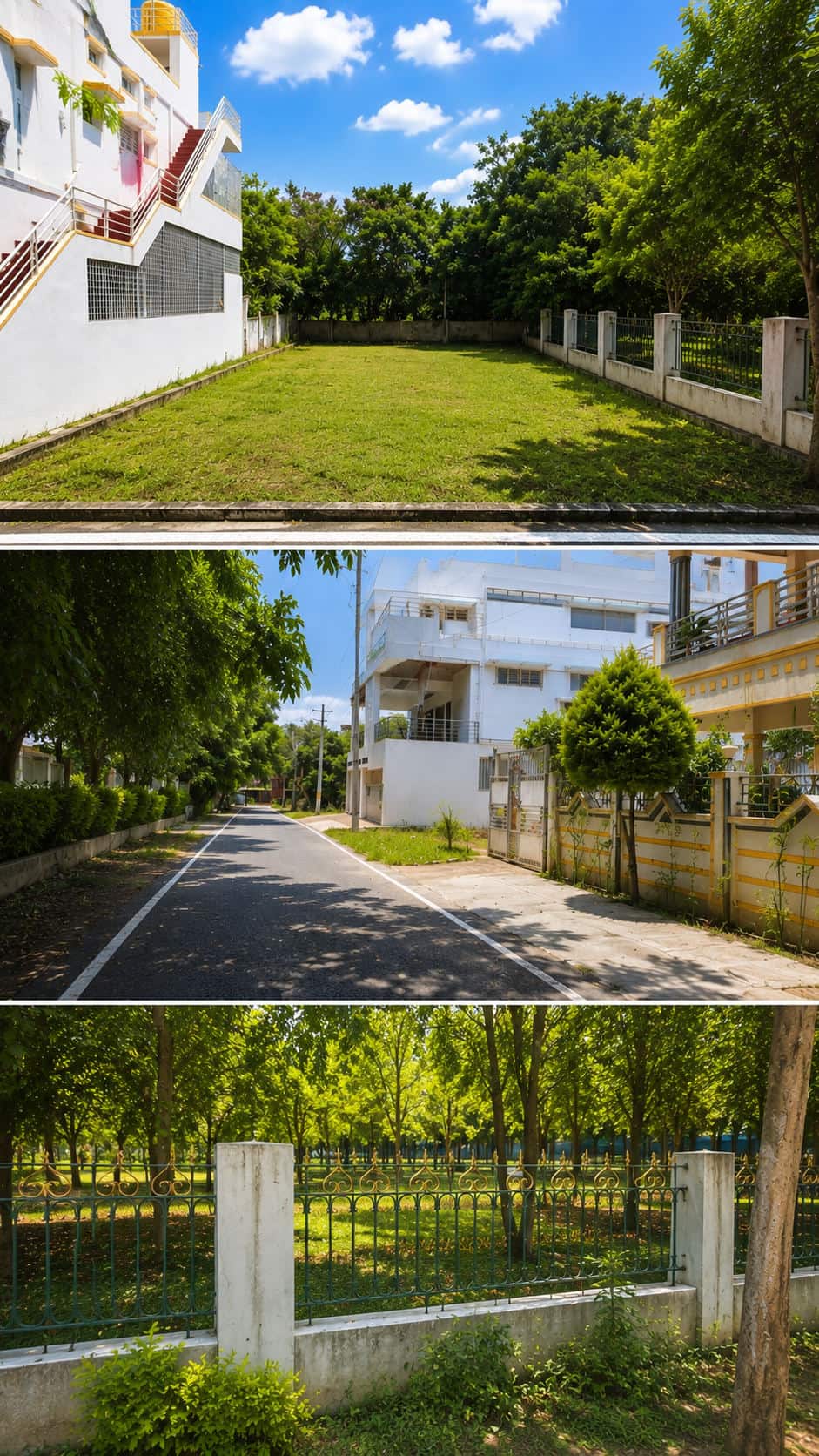
A vacant plot is the property NRIs tend to worry about most, and with reason: an empty, unwatched site can attract dumping, a neighbour's creeping construction, squatters or, in the worst cases, someone who forges documents and tries to sell it. Prevention is far cheaper than a court case.
- Mark and fence it. Keep boundary stones in place and put up a fence or compound wall within your boundary, following local rules. Clear boundaries make encroachment obvious.
- Put up a board with the site number, a note that it is private property and a contact number for your representative.
- Keep it tidy. Have weeds and rubbish cleared from time to time; a neglected plot looks abandoned, which invites trouble.
- Arrange regular visits. Ask someone local you trust to visit every few months and send date-stamped photos from the same spots, including the boundaries.
- Check the Encumbrance Certificate periodically. It lists registered transactions on your property, so a fresh one every so often can reveal a fraudulent sale or mortgage early. Our guide to the Encumbrance Certificate in Karnataka explains how to get one.
- Pay the property tax every year in your own name.
If you find an encroachment or a suspicious transaction, act quickly: bring in a lawyer, file a police complaint and send a legal notice. Delay makes these disputes harder. Our guide to property scams in Mysuru covers the warning signs.
Keeping Your Documents Digitised and Safe
Your documents are your proof of ownership. Losing them, or letting them fall into the wrong hands, is one of the bigger risks for an absentee owner.
- Scan everything clearly: title deed and earlier deeds, EC, khata, tax receipts, approvals, POA, rental agreements, utility bills, and your ID and PAN. Name the files clearly and keep a simple index.
- Store copies in two places, such as an encrypted cloud folder and an offline drive, so one failure doesn't lose everything.
- Keep originals secure in a bank locker or with a trusted family member, never with a manager or tenant. Share copies only.
- Update the file whenever something changes: a new tax receipt, a renewed agreement, a fresh EC.
- Know the fallback. If a registered document is lost, a certified copy can usually be obtained from the sub-registrar office where it was registered, but it is far better not to need one.
Tell one trusted family member where everything is and how to reach it, so they can act quickly if something happens to you.
A Simple Routine, and Someone Local You Trust
None of this needs daily attention. A simple routine covers most of it: pay property tax once a year, get a fresh EC every so often, read your manager's reports and photos, renew the rental agreement on time, and keep your document file current. Build a relationship with one or two people on the ground you can call when something unexpected happens: a relative, a trusted neighbour, a lawyer and, if you rent, a good manager.
Good records also make a future sale far easier. When that time comes, our guide for NRIs selling property in India explains the tax and repatriation steps.
Siddaganga Real Estate has worked with families and investors in Mysuru for over twelve years, helping with document verification, e-Khata and, when owners are ready, selling. If you would like someone local to talk to about your property, you can contact the team from wherever you are.
Frequently asked questions
- Can I manage my property in India while living abroad?
- Yes, with a simple system. The essentials are a specific power of attorney for someone you trust, a reliable person or property manager on the ground, rent and bills paid through bank accounts, property tax paid online each year, and your documents digitised with the originals kept safe. Regular date-stamped photos and a periodic Encumbrance Certificate check help you catch problems early, before they become expensive.
- Does my tenant have to deduct TDS if I am an NRI landlord?
- Yes. When the landlord is a non-resident, the tenant is required to deduct TDS from the rent under Section 195 and deposit it with the government. The tenant needs a TAN, must file TDS returns and should give you a certificate for the tax deducted. Many tenants don't know this, so explain it before signing and include it in the rental agreement. Confirm the current rate with a chartered accountant.
- How do I protect my vacant plot in Mysuru from encroachment?
- Make it visibly owned and cared for. Keep boundary stones in place, fence it, put up a board with the site number and a contact, and have weeds and rubbish cleared from time to time. Ask someone you trust to visit every few months and send date-stamped photos, pay the property tax every year, and check a fresh Encumbrance Certificate periodically. If anything looks wrong, involve a lawyer quickly.
- Should I give a relative a general power of attorney for my property?
- It is usually safer not to. A general POA can hand someone wide powers, sometimes including selling or mortgaging your property. For day-to-day management, give a specific POA that lists exactly what the holder may do, such as paying taxes, signing rental agreements and dealing with utilities, and leave out the power to sell unless you are actually selling. Have a lawyer draft it and register it.
This guide is general information, not legal, tax or financial advice. Rules, rates and procedures change — confirm the current position with a property lawyer, chartered accountant or the relevant authority before you act.