By Siddaganga Real Estate9 min read
Most properties that sit unsold for months are not bad properties. Usually they are priced on hope rather than evidence, missing a document the buyer's lawyer asks for, or shown in a way that makes them look tired. All three are within your control. Whether you are selling a site in a newer layout, a family house or a flat you no longer need, the same few steps tend to shorten the time between listing and registration. This guide walks through them in order: a realistic price, papers ready before anyone visits, good presentation, where to list, viewings, qualifying buyers and negotiation. It is general guidance, not legal or tax advice; for those questions, speak to a property lawyer or a chartered accountant.
Start With a Realistic Price
Price is usually the biggest single reason a property sells quickly or sits. Buyers compare constantly, and a property priced well above similar ones simply stops getting calls. After months on the market, buyers wonder what is wrong with it, and you may end up accepting less than a fair price would have fetched early on.
Build your price from evidence, not from what a neighbour says they were offered:
- Comparable sales. Look at recent sales of similar properties nearby: similar size, facing, road width, approval status and, for houses, age and condition. Actual sale prices matter far more than asking prices on listing sites, which are often optimistic.
- Guidance value. The government's reference value for your area, which you can look up through the Kaveri portal. Stamp duty is usually charged on the higher of the guidance value and the actual price. Our guide to guidance value and market value explains how the two relate.
- A professional valuation. For a larger or unusual property, a registered valuer's report gives you an independent figure to show buyers.
Leave a little room to negotiate, but not so much that serious buyers dismiss the price. If the first few weeks bring no calls or visits, treat that as feedback on the price. And never record a lower price in the sale deed than the buyer actually pays: it is illegal, it leaves both sides exposed, and it can cause problems with your capital-gains tax.
Get Your Documents Ready Before You List
One of the commonest reasons a sale stalls after a buyer says yes is paperwork. The buyer's lawyer, and their bank if they are taking a loan, will want the full document set, and every missing paper adds delay, often enough for a buyer to cool off or find something else.
Gather everything before the first viewing. For most properties that means the title deed and the earlier deeds showing how ownership reached you, a recent Encumbrance Certificate (EC), the khata or e-Khata with up-to-date property tax receipts, and the approved layout or building plan. If there is still a home loan on the property, talk to your bank now about closing it at the time of sale. Our checklist of documents you need to sell a property in Karnataka covers the full list, including papers sellers usually forget.
Keep clear scanned copies ready for a serious buyer's lawyer, but hold on to the originals until registration. And if something is out of order, such as a khata still in a late parent's name, unpaid tax, or measurements that differ between documents, fix it before listing. Buyers who discover problems late tend either to walk away or to ask for a large discount.
Present the Property So Buyers Can Picture It
First impressions now start online. Many buyers shortlist from photographs before they visit, so dark, blurry pictures quietly cost you visits.
For a house or flat:
- Clean thoroughly, clear clutter and put away most personal items so rooms look larger.
- Fix the small things buyers notice: leaking taps, damp patches, broken switches, loose tiles, sticking doors and peeling paint.
- Photograph in good daylight with the lights on: every room, plus the front, the street and parking.
- Add a simple floor plan with room sizes.
For a vacant plot or site:
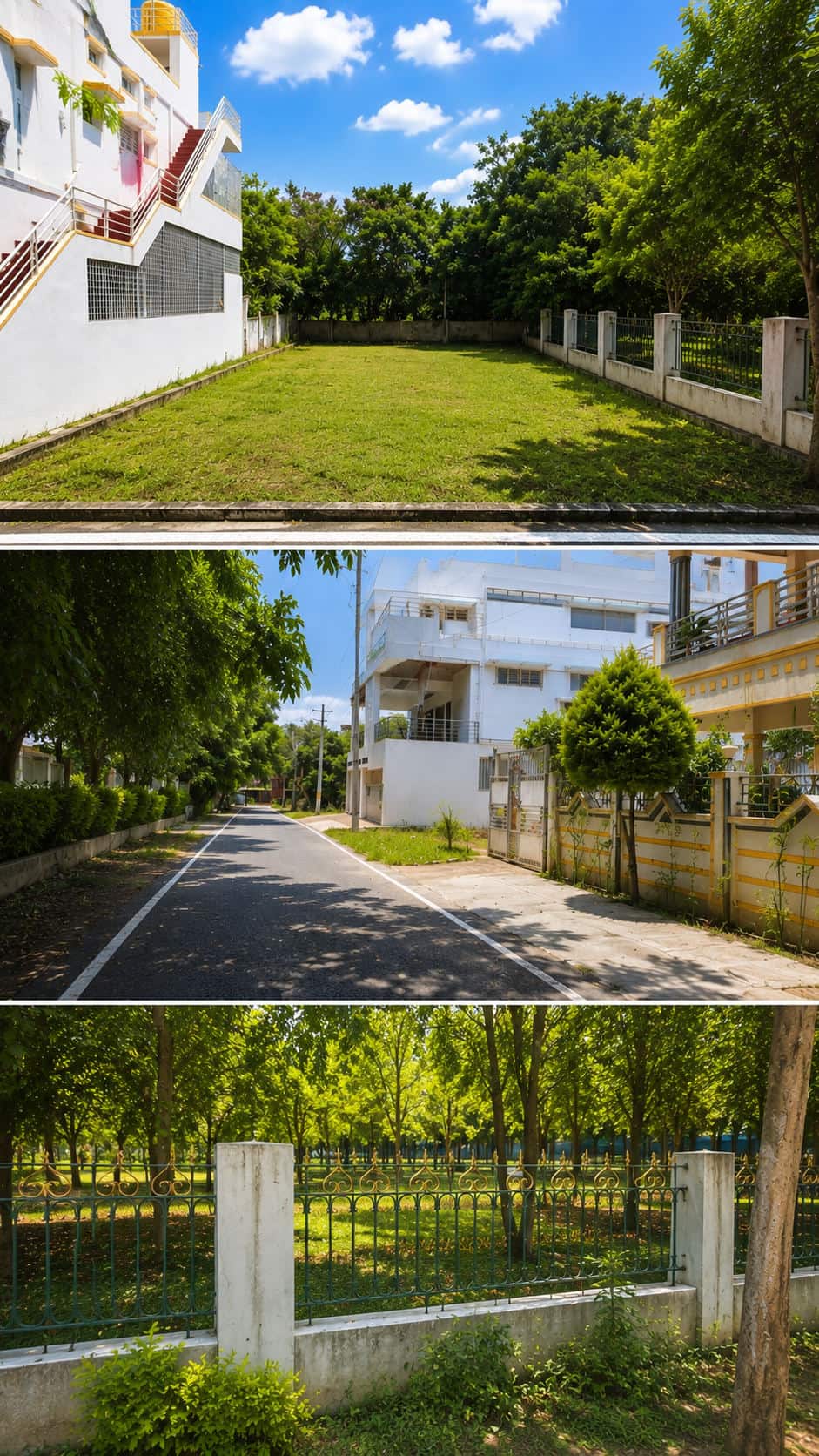
- Clear weeds, rubbish and debris so the land looks cared for.
- Make the boundary easy to see, with boundary stones, a fence or clear markings.
- Put up a small board with the site number and a contact number.
- Photograph the plot from each corner, the road in front and the surroundings, and share the exact map location and dimensions.
A short, steady video walkthrough helps buyers in Bengaluru or abroad; keep it honest, with no lenses or editing that make rooms look bigger. Resist major renovations just to sell: buyers often have their own plans, and you may not get the cost back. Fix what is broken, clean what is dirty, and let the property be seen clearly.
Where to List, and How to Handle Viewings
Cast a reasonably wide net. Sellers usually combine a few of these:
- Online property portals and classifieds, with your clearest photos, exact dimensions, approval status and an honest description.
- A local agent who already has buyers looking for your kind of property.
- Word of mouth through neighbours, colleagues, relatives and community groups.
- A board on the property itself, especially for a plot on a busy road.
Keep the facts consistent everywhere; a buyer who sees two different sizes or prices loses trust quickly.
Viewings are where sales are won or lost, so make them easy. Offer evenings and weekends, when working buyers are free. If you live elsewhere, leave a key with a trusted relative or neighbour who can show the property. Keep the house clean and aired, with water and power on so buyers can try taps and switches.
During a visit, let buyers look around at their own pace and answer questions honestly. If there is a known issue, such as a seasonal leak, a narrow access road or an unusual approval history, say so. Buyers usually find out anyway, and a problem revealed late does far more damage than one explained upfront.
Qualify Buyers and Put the Terms in Writing
A fast sale needs a buyer who can actually complete. Find out, politely and early, how a buyer plans to pay and how soon.
- Buyers taking a loan. Ask whether they have spoken to a lender; one with an in-principle approval is further along than one who hasn't started. Their bank will also run its own legal and technical checks on your property, another reason to have clean documents.
- Buyers using their own funds can often move faster, but still ask about their timeline.
- Buyers who must sell first. If their purchase depends on selling another property, your timeline depends on theirs. That may be fine; just go in knowing it.
Once you agree terms, record them. Many sales use a sale agreement setting out the price, the advance, the payment schedule, the registration date and what happens if either side backs out. It does not transfer ownership, which only the registered sale deed does, but it keeps both sides committed. Our guide to sale agreements and sale deeds explains the difference.
Take every payment by bank transfer or demand draft, not cash; income-tax rules restrict cash in property deals. Don't hand over original documents or possession until the full amount has reached your account and the deed is registered.
Negotiate Calmly and Keep the Deal Moving
Before the first offer arrives, decide your walk-away price, the lowest figure you will accept, and keep it to yourself. Deciding it calmly in advance stops you making a choice you regret later.
- Don't reveal urgency. A buyer who knows you must sell quickly will offer less.
- Answer every serious offer, even a low one, with a reasoned counter-offer backed by your comparable sales and valuation.
- Negotiate on more than price. The registration date, the size of the advance and the fittings you leave behind can all bridge a gap.
- Confirm any agreed changes in writing the same day.
After you agree, keep up the momentum. Reply quickly to the buyer's lawyer and bank, book the registration appointment through the Kaveri system in good time, and make sure every owner named on the title deed can attend to sign or has given a valid power of attorney. Stamp duty and registration charges are normally paid by the buyer unless you agree otherwise.
Plan for tax before registration, not after. The buyer may have to deduct TDS from the price, and any profit may attract capital-gains tax, with exemptions if you reinvest. Our guide to capital gains tax on a property sale explains how it works, and a chartered accountant can work out your own figures.
When an Agent Can Help
You can sell a property yourself, and plenty of owners do. An experienced local agent earns their fee by bringing what you may not have: buyers already looking for your kind of property, a grounded sense of what similar properties have actually sold for, time to handle calls and viewings, and familiarity with the paperwork that holds sales up. That help matters most if you live outside Mysuru, if your documents need sorting out, or if you simply don't want to field calls from strangers.
If you use an agent, agree the brokerage and what it covers in writing before you start, ask how they will market the property and screen buyers, and keep your original documents with you. Be wary of anyone who promises an unusually high price just to win the listing; that tends to end in a long wait and a price cut.
Siddaganga Real Estate has helped families and investors in Mysuru for over twelve years, including owners selling plots, sites and houses. If you would like a realistic view on price and help getting your documents sale-ready, you can share your property details on our selling page and talk it through, without any pressure.
Frequently asked questions
- How long does it take to sell a property in Mysuru?
- There is no fixed timeline. A realistically priced property with its documents ready can find a buyer within weeks, while an overpriced one, or one with paperwork gaps, can sit for months. After a buyer agrees, the time to registration depends mostly on their bank's checks if they are taking a loan, and on how quickly any document questions are answered.
- Can I sell my property below the guidance value?
- You can agree any genuine price with a buyer, but two things follow. Stamp duty is usually charged on the higher of the guidance value and the actual price, and for capital-gains purposes the tax department can treat the guidance value as your sale price if you register below it. If your property is genuinely worth less because of its condition, access or shape, get a registered valuer's report and speak to a chartered accountant before agreeing the price.
- Why is the buyer paying me less than the agreed price?
- Usually because of TDS. If you are a resident seller and the sale price is ₹50 lakh or more, the buyer must deduct 1% TDS under Section 194-IA and deposit it with the income-tax department against your PAN. It is not a discount or a fee: it counts towards your tax on the sale, and any excess can be claimed back in your return. If you are an NRI, a different and usually larger deduction applies.
- What repairs are worth doing before selling a house?
- Focus on what buyers notice and what their engineer will flag: leaks and damp, electrical faults, broken fittings, cracked tiles and tired paint. These are usually modest jobs compared with the discount a buyer will ask for if they find them. Big renovations such as a new kitchen may not pay for themselves in a sale, because buyers have their own plans.
This guide is general information, not legal, tax or financial advice. Rules, rates and procedures change — confirm the current position with a property lawyer, chartered accountant or the relevant authority before you act.