By Siddaganga Real Estate9 min read
Corner plots have a reputation in Mysuru. Many buyers ask for them by name, and sellers usually price them higher than the plots beside them. The appeal is real: two open sides mean more light and air, and a road on each side opens up design options a mid-row plot does not have. But a corner plot also gives up some privacy, takes more of the traffic, and can come with building rules that leave you less room to build than you might expect. This guide sets out the advantages and drawbacks honestly, explains the practical questions to ask before you pay extra for a corner, and helps you judge whether one suits the way your family actually lives.
What counts as a corner plot
A corner plot sits where two roads meet, so two of its sides face a road instead of a neighbour. In a planned layout it is easy to identify on the approved layout plan. On the ground, look more closely, because not every corner is equal.
Check that both roads are genuine roads shown on the approved layout plan, not a strip of land that simply happens to be open today. Measure the width of each road and compare it with the plan: a corner formed by a main road and a narrow lane behaves very differently from one where two quiet residential roads meet. Notice which road carries more traffic, where vehicles slow down or turn, and whether either road is proposed for widening, which could take a strip from two sides of the plot rather than one.
Note which directions the two roads face, too. Direction affects sunlight, which side takes the afternoon heat and, for families who follow it, Vastu. Our guide to site dimensions explains how size, shape and road width shape what you can build on any plot, corner or not.
The advantages: light, air and two-road access
The biggest everyday benefit of a corner plot is openness. With roads on two sides, the house can have windows on two faces that will never be blocked by a neighbour's wall, which usually means more daylight and better cross-ventilation. In Mysuru's warmer months, a home that breezes through naturally is more comfortable and leans less on fans and air-conditioning.
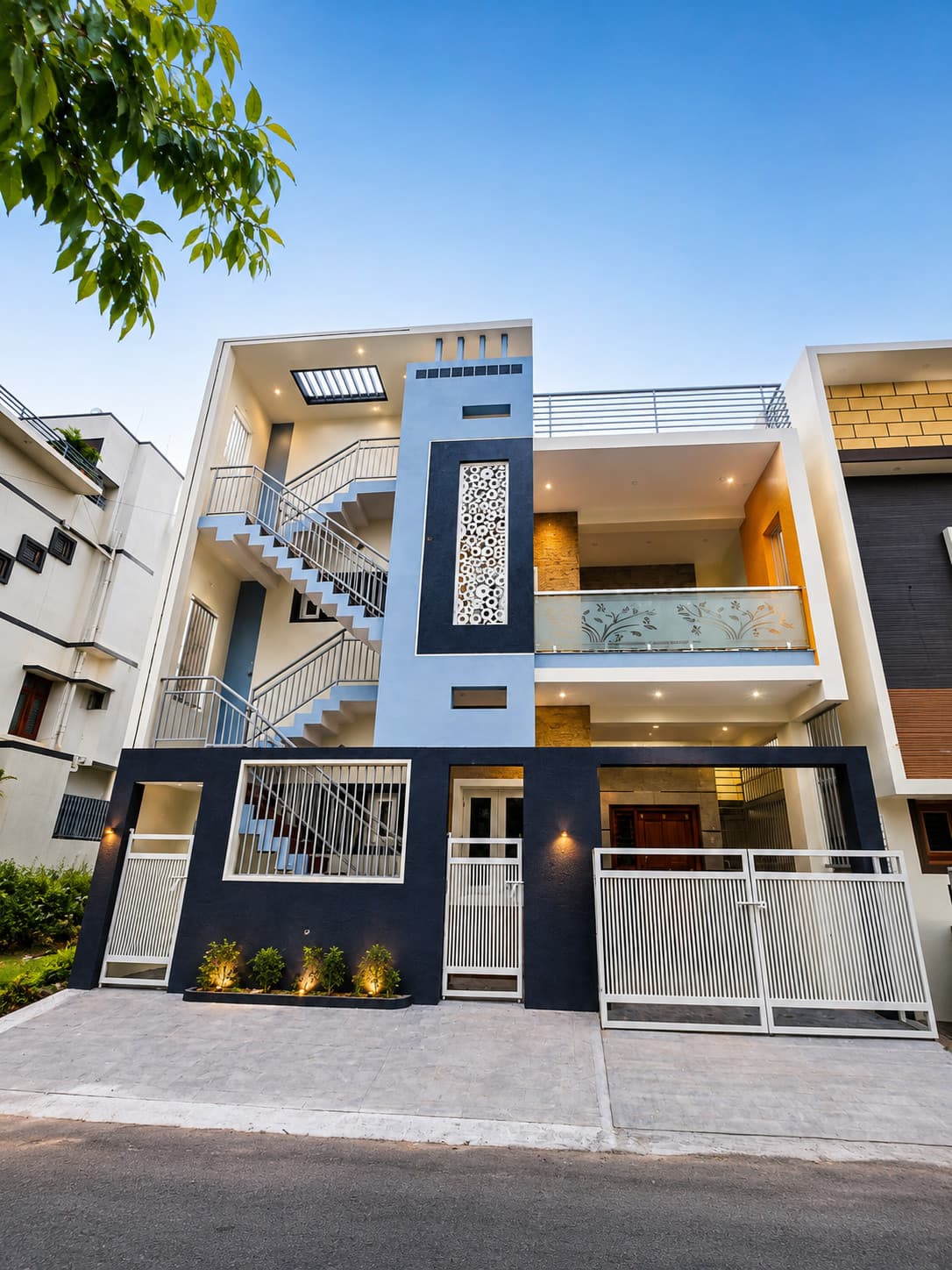
Two roads also mean two possible entrances. Families often use this, within what the approved building plan allows, to give an upper floor its own staircase and gate — useful for a rental unit, for grown-up children, or for parents who want some independence — or to separate the car entrance from the main door. Parking and deliveries are easier, and construction itself can be simpler when materials can arrive from two sides.
A corner house also tends to feel less boxed in. With no neighbour pressed close on two of its sides, the home can look and feel more spacious than a mid-row house of the same size. Many families value that sense of space as much as any practical benefit, and it is one reason corner sites appeal to people planning a home to live in for many years.
Visibility and commercial potential, within the rules
A corner site is seen from two roads, which is why shops, clinics and small offices like them. If you are thinking of a ground-floor clinic, a small office or a shop with your home above, a corner can make the business easier to find and reach.
Be careful here. Whether you can use a residential site for any commercial or professional purpose depends on the land use permitted for that area under the master plan and zoning rules, and on any conditions attached to the layout approval — not on the fact that the site is on a corner. Some residential areas allow limited non-residential uses; others do not. Before you pay more for a corner in the expectation of commercial use, ask the planning authority or Mysuru City Corporation what is permitted on that specific site, and have your lawyer check that nothing in the layout conditions or the deed rules it out.
Visibility has a quieter downside as well: a corner house is noticed by everyone who passes. For some families that is welcome. For others it is exactly what they did not want — which brings us to the drawbacks.
The drawbacks: privacy, traffic, noise and security
The same openness that brings in light also lets in the world. With two sides facing the road, more of your home is visible to passers-by, and a garden or sit-out on a corner has less privacy than one tucked behind a mid-row house. Many corner owners end up with taller walls, screens or dense planting to win some of it back.
Corners also concentrate traffic. Vehicles slow, turn and honk at junctions, headlights sweep across windows at night, and dust from two roads settles on your walls and furniture. If the corner is on a busy road, or near a school, market or bus stop, the effect is stronger. Families with small children should think about a gate that opens straight onto a junction.
Security is the third concern. Two exposed sides mean a longer boundary to watch and more ways in. This is manageable — a sturdy compound wall, good gates, lighting along both roads — but it is a cost and a responsibility that a mid-row plot shares with its neighbours.
None of this rules a corner plot out. It simply means visiting at different times, standing at the corner during the evening rush, and asking honestly whether you would enjoy living there every day. Our site visit checklist lists what else to look for on the ground.
Setbacks on two sides and a longer compound wall
Setbacks are the open margins that building rules require you to leave between the house and the plot boundaries. On a corner plot, the sides facing both roads are often treated as fronts, which can mean wider margins on two sides instead of one — and a smaller footprint for the house than a mid-row plot of the same size would allow. Exactly how the rules apply depends on the plot size, the width of each road and the regulations of the authority that approves your building plan. Ask that authority, or an architect who submits plans there regularly, before you buy. Our guide to building plan approval explains the process.
The compound wall is the other hidden cost. A mid-row plot shares boundaries with neighbours on two or three sides; a corner plot has two sides facing the road, each needing a proper, presentable wall and usually a gate. That is more material, more labour and more upkeep, and it is worth getting a contractor's estimate before you decide how much extra the corner is worth to you.
Drainage deserves a look too. Rainwater from two roads can run towards a corner, so check the level of the plot against both roads and see where the storm-water drains actually lead.
Price, resale and the Vastu question
Corner plots usually cost more than comparable mid-row plots in the same layout. How much more varies from layout to layout and seller to seller; there is no standard figure, whatever you may be told corners "always" fetch. Judge the extra on what it gives you. Add the cost of the longer wall and any design compromises the setbacks force, then ask whether the light, access and flexibility are worth that total to your family.
At resale, a corner's appeal rests on the same factors in reverse. A corner on a quiet residential junction tends to appeal to families for the same reasons it appealed to you. A corner on a noisy main road may interest someone wanting a clinic or shop — if the land use permits it — more than a family looking for a peaceful home.
Vastu often enters the conversation as well. Some families prefer corner plots in particular directions and avoid others, while many give it little weight. If it matters to you, our guide to Vastu tips for plots and homes covers the common preferences — but treat it as one factor alongside approvals, title and everyday comfort, not a substitute for them.
Is a corner plot right for you?
A corner plot tends to suit you if you value light and ventilation, want a separate entrance for a rental unit or an extended family, need easy parking, or have a professional use in mind that the rules permit. It may not suit you if you prize privacy and quiet, have small children who will play near the gate, or would be stretching your budget just to afford the corner in the first place.
Before you decide:
- Confirm both roads and their widths on the approved layout plan.
- Ask the approving authority, or an architect, how setbacks apply to this plot and what footprint that leaves.
- Get an estimate for the compound wall and gates.
- Visit at rush hour, after dark and after rain.
- Check any commercial plans against the permitted land use.
The legal checks — approval, title, Encumbrance Certificate, khata — are exactly the same as for any other plot, and they matter far more than which corner you choose.
If you would like to compare corner and mid-row options side by side, you can browse current plots in Mysuru. Siddaganga Real Estate has helped families buy plots in the city for over twelve years, and the JP Nagar office is happy to talk it through.
Frequently asked questions
- Are corner plots worth the extra price?
- They can be, if you will use what a corner offers — more light and air, two entrances, easier parking or a permitted professional use. They are less worthwhile if you value privacy and quiet, or if the setbacks leave you a smaller house. There is no standard premium, so compare the extra cost, including the longer compound wall, with the benefits for your own plans.
- Do corner plots have more setback requirements?
- Often, yes. Building rules frequently treat both road-facing sides of a corner plot as fronts, which can mean wider open margins on two sides and a smaller footprint for the house. The exact requirements depend on the plot size, the road widths and the approving authority's regulations, so ask that authority, or an architect familiar with its rules, before you buy.
- Can I run a shop or clinic from a corner plot in a residential layout?
- Only if the permitted land use allows it. What you can do on a site depends on the master plan and zoning rules for the area and on any conditions attached to the layout approval, not on the site being a corner. Ask the planning authority or city corporation what is allowed on the specific site, and have your lawyer check the layout conditions and the deed, before paying extra.
- Is a corner plot good according to Vastu?
- It depends on the direction of the corner and on your family's own beliefs. Some families prefer corner plots facing particular directions and avoid others, while many give Vastu little weight. It is a traditional preference rather than a rule, so weigh it alongside the practical factors — approvals, title, light, noise and budget — that matter to every buyer.
- Are corner plots less safe?
- They have more exposed boundary, so they need a little more attention to security. Two road-facing sides mean more ways in and more passers-by, which a sturdy compound wall, good gates, lighting on both sides and friendly neighbours largely address. Visit after dark before you buy to see how well lit the junction is and how busy it stays at night.
This guide is general information, not legal, tax or financial advice. Rules, rates and procedures change — confirm the current position with a property lawyer, chartered accountant or the relevant authority before you act.