By Siddaganga Real Estate4 min read
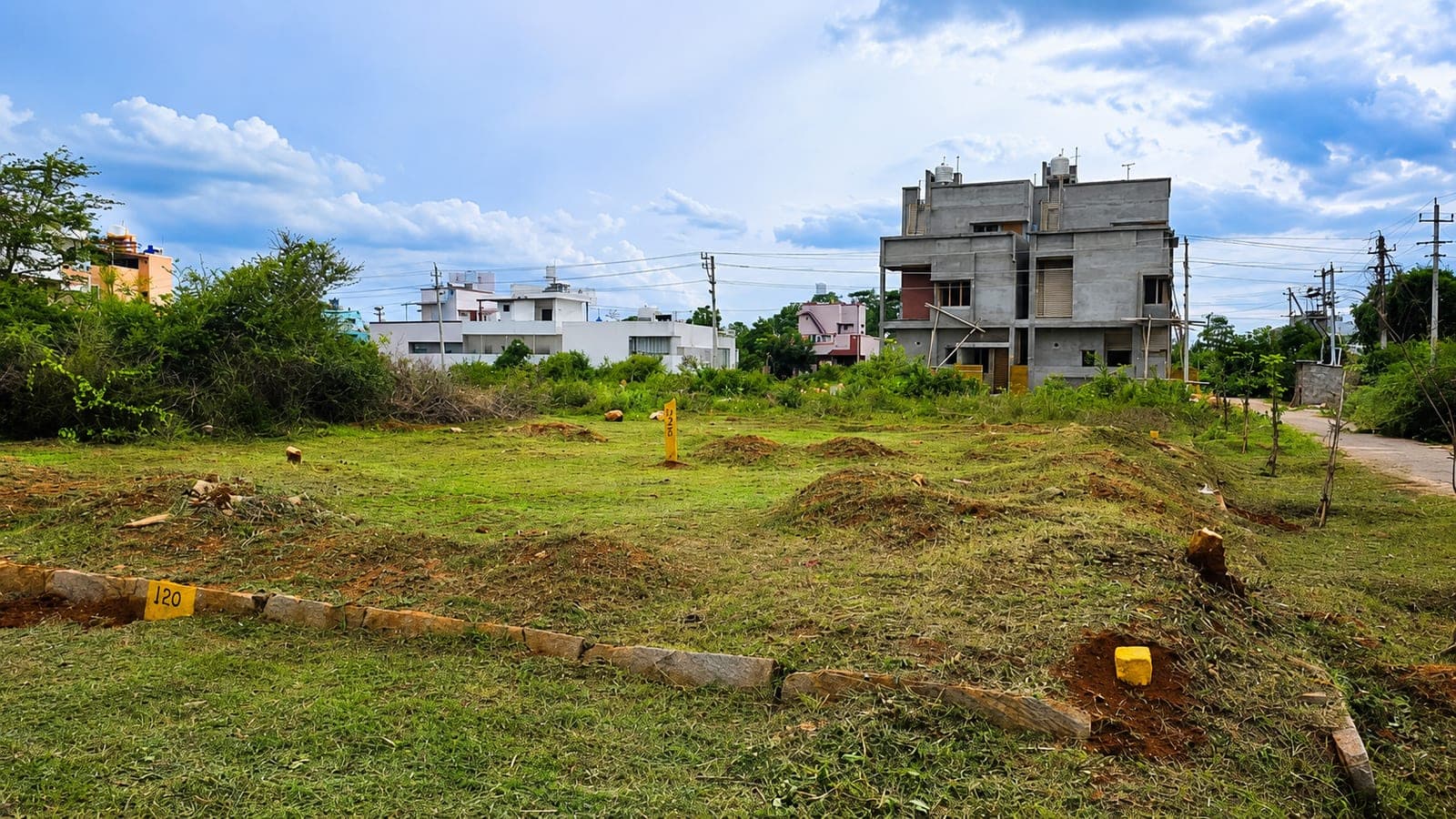
A single line in a Mysuru property listing can carry a lot: "East-facing 30×40 corner site, MUDA-approved, clear title, e-Khata available, ready to register, price negotiable." Every phrase in it means something. None of them proves anything. Here is what each one really tells you, and what to check before you rely on it.
Size and area
30×40. The plot's width and depth in feet, usually with the road-facing side first: 30 by 40 feet, or 1,200 sq ft. Deeds and layout plans may give the measurements in metres, so check the figures there and measure the plot yourself; our guide to site dimensions explains what each common size suits.
Plot, built-up and carpet area. Plot area is the land, built-up area is the building's floor area including its walls, and carpet area is the floor you can actually use inside the walls. A bare "2,400 sq ft" could mean any of them, so ask which, and compare prices per square foot only on the same basis.
Position and direction
Corner site. A plot where two roads meet, which usually brings more light, more air and a choice of entrances, at a higher price. Check that both roads appear on the approved layout plan, and ask how the building rules for two road-facing sides affect what you can build; our guide to corner plots weighs it up.
East-facing, north-facing. For a plot, this usually means the side the road runs along; for a house, it often means the direction of the main door, which is not always the road side. Many families prefer these facings for Vastu reasons, so ask which the listing means and check with a compass app on site.
Gated layout. A boundary wall, an entrance gate and often a watchman, which tells you about the gate, not the approvals. Ask who maintains the roads, drains and streetlights, whether they will be handed over to the local body, and what the maintenance charges are.
The paperwork phrases
MUDA-approved. MUDA, the Mysuru Urban Development Authority, has sanctioned the layout plan, which counts for a lot, but only if your plot number and measurements appear on that approved plan. Ask for the approval details and verify them with MUDA, because "approval in process" is not approval; our guide to MUDA-approved plots shows how.
Clear title. The seller's claim that they own the property outright, free of loans, disputes and other claims. It is a conclusion only a property lawyer can reach, from the title deed, the chain of earlier deeds and the Encumbrance Certificate; our property documents checklist lists what they will want to see.
e-Khata available. The property has a digital khata, the municipal record used for property tax, with Mysuru City Corporation or the relevant local body. Check through official channels that it is in the seller's name, matches the sale deed and shows tax paid up to date, and remember that a khata supports ownership without proving it; our guide to e-Khata in Mysuru explains more.
Ready to register. The seller says the paperwork is in order for the sale deed to be registered. Ask whether every owner will be available to sign, whether any loan on the property has been closed, and whether the tax is up to date, because nothing is ready until your lawyer has checked the documents.
The price line
Price negotiable. There is probably room to talk, but it tells you nothing about whether the asking price is fair. Find out what similar properties nearby have actually sold for, keep the government's guidance value in mind (stamp duty is generally charged on the higher of the guidance value and the price), and negotiate only after the documents are verified.
Reading a listing the right way
Treat every phrase in a listing as a question to ask, not a fact to rely on. The good ones will turn out to be true, and a genuine seller will be happy to show you the paper behind each of them. An unusually low price on an otherwise perfect listing is a reason to look harder, not to hurry.
Read current properties in Mysuru the same way, and our office in JP Nagar will gladly walk you through the documents behind any of our listings.
Questions people ask
- What is the difference between carpet area and built-up area?
- Carpet area is the usable floor space inside the walls of a home, the part you could actually cover with a carpet. Built-up area adds the thickness of the walls and, often, balconies, so it is always larger. Apartments sometimes quote super built-up area, which also includes a share of common spaces. When comparing prices per square foot, make sure both figures use the same measure.
- Is a MUDA-approved plot the same as a clear-title plot?
- No. MUDA approval means the Mysuru Urban Development Authority has sanctioned the layout plan. Clear title means the seller genuinely owns the plot and it is free of loans, disputes and claims. A plot can have one without the other, so a careful buyer checks both: the approval with MUDA, and the title with a property lawyer.
- What does an east-facing plot mean?
- It usually means the road runs along the east side of the plot, so a house built on it would have its front, and often its main entrance, facing east. Many families prefer east- or north-facing plots for Vastu reasons, though a well-designed home can work on any facing. Check the direction yourself with a compass on site rather than relying on the listing.
Go deeper in our guides
- Site Dimensions in Mysuru: 30×40, 30×50, 40×60 and 50×80 Explained · Buying a Property
- Corner Plots in Mysuru: Pros, Cons and What to Check Before You Buy · Buying a Property
- MUDA-Approved Plots & Sites in Mysuru: A Buyer’s Guide · Buying a Property
- Property Documents Checklist: What to Verify Before Buying in Mysuru · Legal & Documents
General information, not legal, tax or financial advice. Confirm anything important with a property lawyer, chartered accountant or the relevant authority before you act.
More from the blog
All posts →
Urgent Sale, Below Market Price? How to Read Those Property Messages
Owner abroad, token today, no time for a visit, papers with the lawyer: the patterns behind 'urgent sale' property messages, and why a genuine distress sale still has papers.
· 5 minRead
Keeping Your Property Papers Safe Once the Home Is Yours
The deed is registered and back in your hands. A simple way to keep it, and every other property paper, safe for the years ahead and easy for your family to find.
· 5 minRead
A Weekend of Site Visits in Mysuru: A Simple One-Day Plan
Three or four sites, an early start, the same notes at every plot and one last look at dusk: a simple plan that turns a Saturday of site visits into a clear decision.
· 5 minRead