By Siddaganga Real Estate9 min read
A new layout can look perfect on a sunny site visit: freshly laid roads, neat boundary stones, a gate with a name board. What you cannot see is how water will reach your house, where your waste water will go, whether the power lines have actually been energised, and what happens to the land when it rains hard. These are the things that decide whether a new home is comfortable to live in or a daily headache, and they are far easier to check before you buy than to fix afterwards. This guide takes you through the utility questions to ask about any new layout in and around Mysuru: piped water and borewells, sumps and overhead tanks, underground drainage and septic tanks, storm-water drains, electricity and streetlights, who maintains it all, and the signs that land may waterlog.
Where will the water come from?
Start with the most basic question: how will water reach your house, and how reliably? For a new layout, the answer is usually one or more of these:
- A connection to the city's piped supply, where the layout is within the area it serves.
- A supply arranged by the developer until the layout is handed over to the local body.
- A common borewell and storage tank serving the whole layout.
- Your own borewell on your plot.
For piped water, check that the pipeline has actually been laid up to your plot and is connected to a working source. Pipes in the ground are not the same as water in the tap. Ask the local body what you would need to apply for a connection.
For borewells, remember that yield varies from plot to plot and can fall in the dry months, and quality varies too. Talk to neighbours who already have borewells, ask whether they buy tanker water in summer, and have a sample tested at a laboratory before relying on it for drinking. In some areas, drilling a new borewell may need permission or registration with the groundwater authorities, so ask before you drill.
Sumps and overhead tanks
Because piped supply is not always continuous, most independent houses here store water in two places: an underground sump that fills from the supply, and an overhead tank on the roof that a pump fills from the sump. Water then reaches the taps by gravity.
If you are buying a house, look at where the sump is. It should be well away from any septic tank or soak pit, so waste water cannot seep in. Check that it is watertight, has a secure lid and is large enough for your household, and ask when it was last cleaned. Look at the pump, the pipes and the overhead tank, which should be covered and easy to reach for cleaning.
If you are buying a plot to build on, plan the sump, overhead tank, any borewell and any septic tank together at the design stage, so they sit a safe distance apart. Rainwater harvesting may be a condition of building-plan approval, and it is worth doing either way; ask the approving authority what is currently required. Our guide to building plan approval in Mysuru covers that process.
Underground drainage or a septic tank?
Next, ask where waste water will go. There are two common answers.
Underground drainage, often called UGD, is a network of sewer pipes, usually under the layout's roads, that carries waste water to a larger sewer line and, ideally, to a treatment plant. But manhole covers on the road do not prove the system works. Ask whether the layout's lines are connected to a working trunk sewer, or whether they have been laid and simply end somewhere, waiting for a connection that may take years.
A septic tank with a soak pit is the alternative where there is no UGD. It works, but it needs space on your plot, must be built properly and kept well away from your sump and any borewell, and has to be emptied from time to time, which is an ongoing cost. In heavy rain, a poorly built system can overflow or smell.
Some gated layouts run their own sewage treatment plant. If so, find out who operates it, who pays for its upkeep, and what happens when the developer moves on. The quickest way to learn the truth is to ask families already living in the layout.
Storm-water drains, lakes and buffer zones
Storm-water drains are the channels, usually along the edges of roads, that carry rainwater away. They are separate from sewage lines, and a layout needs both. Walk the roads and check that drains exist on both sides, are continuous rather than broken, and lead somewhere sensible, such as a larger drain or a natural valley, instead of stopping at the edge of the layout. Drains choked with silt, rubbish or sewage are a warning of trouble in the monsoon.
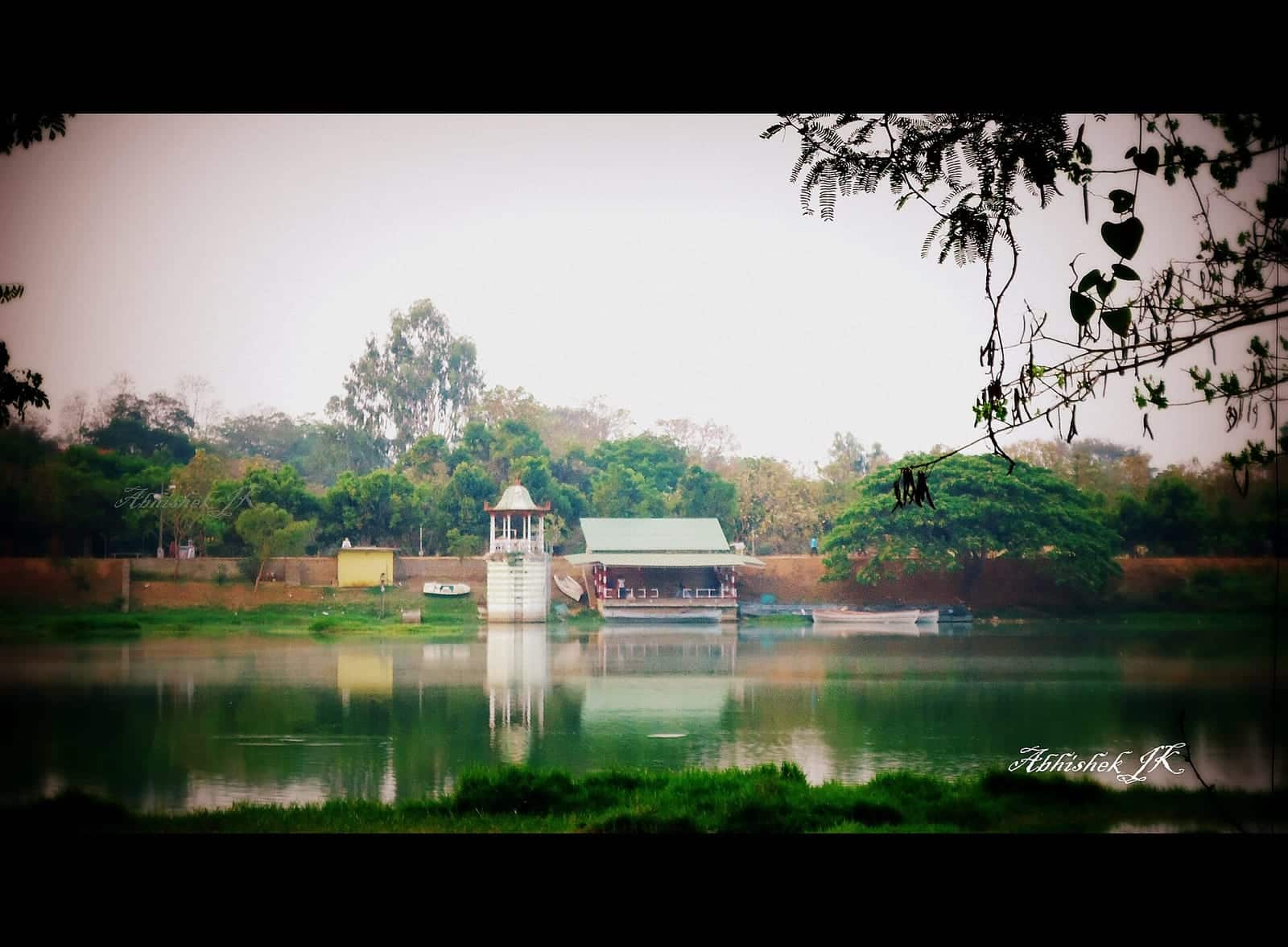
Take particular care if a plot is near a lake, a tank bed or a large natural drain (in Karnataka, a major storm-water channel is often called a raja kaluve). Planning rules generally restrict building within buffer zones along lakes and major drains. The width that applies depends on the type of water body and on the rules in force at the time, and those rules can change. Do not rely on a seller's assurance or a brochure: ask MUDA, or have a property lawyer check what applies to the specific plot before you pay anything.
Electricity and streetlights
In Mysuru, electricity is supplied by CESC, the Chamundeshwari Electricity Supply Corporation. For a new layout, there are three things to find out.
First, has the layout been properly electrified? Look for poles or underground cables along the roads and transformers placed to serve the plots, and ask whether CESC has energised the network or whether the developer is running on a temporary arrangement. It is also fair to ask whether the supply was planned for the whole layout once every plot has a house on it.
Second, what will you need for your own connection? CESC will ask for documents when you apply, which may include ownership papers and building approval. Ask CESC for its current list rather than relying on the developer's word.
Third, check the streetlights. Are they installed and working? Who pays the bill and fixes them when they fail: the developer, a residents' association or the local body?
If a high-tension power line crosses or runs close to a plot, ask what the clearance rules mean for what you can build there.
Who maintains the layout after you buy?
A new layout is looked after first by its developer. In time, its roads, drains, streetlights and water lines are meant to be handed over to the local body, which is Mysuru City Corporation within city limits or the gram panchayat or another local body outside them, and which then maintains them and collects property tax. Some gated layouts stay private instead, run by a residents' association funded by maintenance charges.
The risky period is the gap in between, when the developer has sold most of the plots and lost interest but the local body has not yet taken over. Roads crack, drains block and streetlights stay dark, with no one clearly responsible. Ask directly:
- Has the layout been handed over, and to which body?
- If not, who maintains it now, and is that commitment in writing?
- Has the approving authority accepted the civic works as complete? In some approvals, part of a layout's sites stay mortgaged to the authority until they are, and a lawyer can confirm whether the site you want is free to sell.
- Which body will issue your Khata and collect your property tax?
Our guide to MUDA, DTCP and panchayat layouts explains how the approving authority shapes all of this.
Signs of low-lying or waterlogging-prone land
Land that collects water is hard to fix after you have built. You can spot many of the warning signs yourself:
- The plot sits lower than the road, so rainwater from the road runs onto it.
- Nearby compound walls show water marks, damp lines or cracks near the base.
- Fresh earth has been dumped to raise the plot, which can hide low ground.
- Reeds or other water-loving plants grow on vacant plots, or water stands for days after rain.
- The layout sits at the bottom of a slope, or next to a lake, tank bed or large drain.
- An old local name includes kere (lake or tank): not proof of anything, but a reason to look at the village map.
If you can, visit during or just after heavy rain, and ask neighbours and shopkeepers where water collects in the monsoon. A property lawyer can check the old survey and village records for signs that the land was once a tank bed or channel; our guide to DC conversion and land records explains those records, and our site visit checklist covers what else to look at on the ground.
When you are ready to look at approved sites, you can start with our MUDA-approved plots in Mysuru. Siddaganga Real Estate has helped families in Mysuru for over twelve years and can walk you through a layout's approvals, documents and practical details before you commit.
Frequently asked questions
- Is a borewell enough for a house in a new layout?
- It can be, but it is risky as your only source. Borewell yield varies from plot to plot, can drop in the dry months, and water quality differs. A piped supply with a borewell as backup is more dependable. Before relying on a borewell, ask neighbours about their experience, have the water tested, and check whether any permission is needed to drill in that area.
- What is the difference between UGD and a septic tank?
- Underground drainage (UGD) is a sewer network that carries waste water away from your house through pipes under the road, ideally to a treatment plant. A septic tank with a soak pit deals with waste water on your own plot and has to be emptied periodically. UGD is more convenient, but only if the layout's lines are actually connected to a working sewer system.
- Who maintains roads and drains in a new layout?
- At first, the developer. Once the civic works are completed and handed over, roads, drains, streetlights and water lines usually become the responsibility of the local body: Mysuru City Corporation within city limits, or the relevant local body outside them. Some gated layouts stay private and are maintained by a residents' association. Ask whether handover has happened, and who is responsible until it does.
- How can I tell if a plot floods in the rain?
- Visit during or just after heavy rain if you can. Check whether the plot is lower than the road, look for water marks on nearby walls, fresh earth fill, reeds or standing water, and notice whether the layout sits at the bottom of a slope or near a lake or large drain. Neighbours and local shopkeepers usually know exactly where water collects.
- Can I build a house near a lake or a storm-water drain?
- Perhaps not on all of the plot. Planning rules generally restrict construction within buffer zones along lakes and major storm-water drains, and the width that applies depends on the water body and the rules in force, which can change. Before buying any plot near water, ask MUDA or have a property lawyer confirm exactly what can be built, rather than relying on the seller's word.
- Who supplies electricity in Mysuru?
- Electricity in Mysuru is supplied by CESC, the Chamundeshwari Electricity Supply Corporation. In a new layout, ask whether CESC has energised the layout's network or whether it still runs on a temporary arrangement, and ask CESC directly for its current list of documents needed for a new connection to your house.
This guide is general information, not legal, tax or financial advice. Rules, rates and procedures change — confirm the current position with a property lawyer, chartered accountant or the relevant authority before you act.